
What Politicians and Your Customers Have in Common
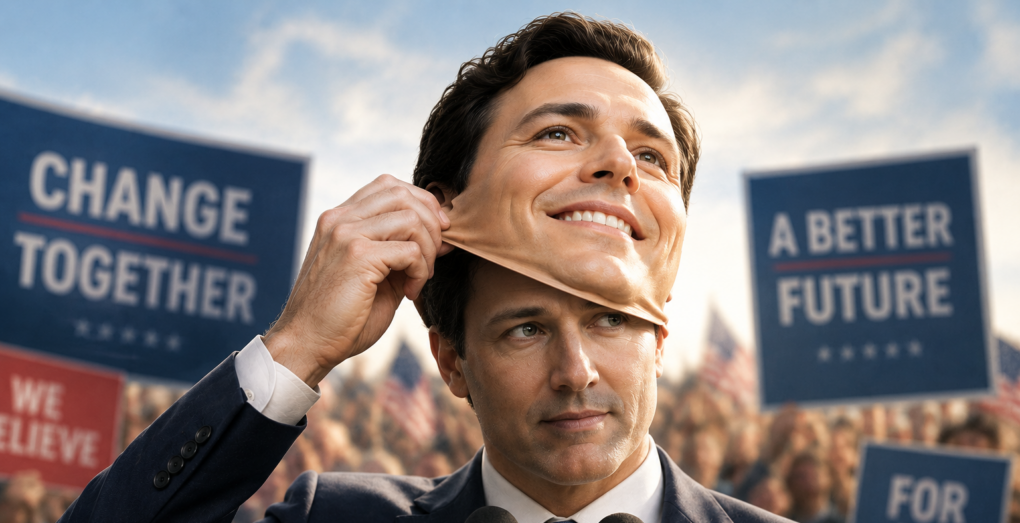
Those campaign ads stopped this week, and the quiet is…rather glorious. But while they were in full swing, they really stirred the research nerd in me (amongst other things). Cast your mind back to what those candidates addressed (again, and again, and…). It was rarely the thing that shapes your week or comes up in your day-to-day. Nobody led with potholes in the road or the price of childcare. They led with whatever issue was loudest and most symbolic, the one that makes a certain kind of voter nod and think yep, they get it.
I’m not making a political point, every side of every aisle does it, and that’s really the vibe of this blog post. It’s what persuasion looks like when the goal is to show people you’re on their side, not to fix an actual problem. And the same thing runs straight through your customer research.
The thing being sold is identity
The polite academic term for this is signaling. The blunter one, now mostly used as an insult, is virtue signaling. A lot of what people tell you in public is less about what they actually do and more about the kind of person they’d like to be seen as. Saying “I care about this” does more social work than doing anything about it, and it costs a lot less.
We didn’t invent this on the internet. Vladas Griskevicius and colleagues ran a now-famous study, published in the Journal of Personality and Social Psychology in 2010, on why people buy green products. The finding was beautifully cynical. People were more likely to choose the eco-friendly option when it cost more than the conventional one, and when they’d be using it in public. Make the green choice cheaper or private and the enthusiasm cooled. The Toyota Prius became the example everyone reaches for, because its whole design says look at me being responsible from fifty feet away. The product was partly a costume.
That’s the reality of – we all wear the costume sometimes. The problem starts when you’re trying to measure people and you mistake the costume for the person underneath.
Do what I say?
Harvard Business Review’s The Elusive Green Consumer found that 65% of people say they want to buy from sustainable, purpose-driven brands. The share who actually do? About 26%!
Far fewer actually do.
Isn’t that a crazy difference? Two out of every three “yes, absolutely” answers don’t mean that at all. Reported churchgoing runs about double the actual headcount. Reported voting sits well above the validated rolls. People answer how they want to be seen rather than how they actually behave.
Edelman found that 64% of consumers say they’ll buy or boycott a brand purely over its stance on a social or political issue (remember Nike, Bud Light?). PwC’s 2024 survey had 80% claiming they’d pay more for sustainable goods, to the tune of nearly 10% extra.
If four in five customers tell you they’ll pay a premium for your values, of course you build the campaign around your values. The trouble is the first chart and the second chart are describing the same people, and only one of the charts is telling the truth about what they’ll do with their hard-earned cash.
McKinsey and NielsenIQ tracked five years of US sales data and found products carrying sustainability claims grew faster than those without. Maybe many of these folks genuinely want to support sustainability efforts, but let me direct you back to the data – fact – at the start of my post.
So how do you measure what they’ll do, not what they SAY they’ll do?
Well, first you need to understand the problem, and that we have covered. Second, take a look at the questions you’re asking. A sloppy question more or less writes the flattering answer for the respondent. Here’s a classic one.
“How important is sustainability to you when choosing a brand?”
That question has one socially acceptable answer, and a bunch of people will provide it. You’ve learned nothing except that people know which box a decent person ticks.
A decent re-write of the question might be more along the lines of:
“Think about the last three things you bought in this category. Walk me through why you picked each one.”
Suddenly sustainability has has to permeate through the respondents mind, naturally positioning itself amongst price, convenience, packaging. If sustainability comes up unprompted, then it’s real. If it doesn’t, you’ve just learned something far more valuable than a 9-out-of-10 importance score.
Here’s another (and maybe somewhat ridiculous) one. The signaling version:
“Would you support a brand that takes a stand on the issues you care about?”
Of course they would; saying no feels like admitting you have no values. The only answer is “yes,” and you don’t really need to run a survey to find that out. But, if we introduce a trade-off into the mix:
“Here are two near-identical products. This one costs 10% more and donates to a cause; this one is cheaper. Which goes in your basket?”
Now we have introduced balance, and a fair and real framing of the question. String a few of those trade-offs together and you have a socially and scientifically sound conjoint analysis.
Both examples do the same task. They prevent people from describing themselves and get them to reveal a choice instead — not what they want you to think that they do.
Questions aren’t the only way we can get to the truth. The Dark Art of Marketing Research reminds us that how you analyze the answers matters just as much. Ask people what drives a decision and they’ll tell you everything matters, or name the respectable reason. But if we reach for our analytical Swiss Army knife — regression and key-driver analysis, MaxDiff, TURF — we can see what actually predicts behavior, which is usually something nobody would have when asked outright.
That’s where we spend our time at Evolve: writing the smart questions and pairing them with predictive analysis – the ultimate combo. If your last study said everyone loves you, but your marketing execution isn’t translating to behavior change, you might want to take a second look at what you’re asking. Even better, ask Evolve to take a look.
Sources
- The Elusive Green Consumer — White, Hardisty & Habib, Harvard Business Review (2019). The 65%-say / 26%-do gap.
- Going Green to Be Seen: Status, Reputation, and Conspicuous Conservation — Griskevicius, Tybur & Van den Bergh, Journal of Personality and Social Psychology (2010). Status, signaling, and the Prius effect.
- Two-Thirds of Consumers Worldwide Now Buy on Beliefs — Edelman Earned Brand (2018). The 64% who buy or boycott on a brand’s stance.
- 2024 Voice of the Consumer Survey — PwC (2024). 80% say they’ll pay more for sustainable goods, around a 10% premium.
- Consumers Care About Sustainability — And Back It Up With Their Wallets — McKinsey × NielsenIQ. Products with sustainability claims grew faster than those without.
- The Missing Half: Survey Estimates vs. Head-Counts of Church Attendance — Hadaway, Marler & Chaves. Reported attendance runs about double the actual count.
Posted by
-
 Kevin JessopCEO & Research Director